2026-10-23 · Tom Harlan
Preventing Ice Dams on Cincinnati Roofs in Winter
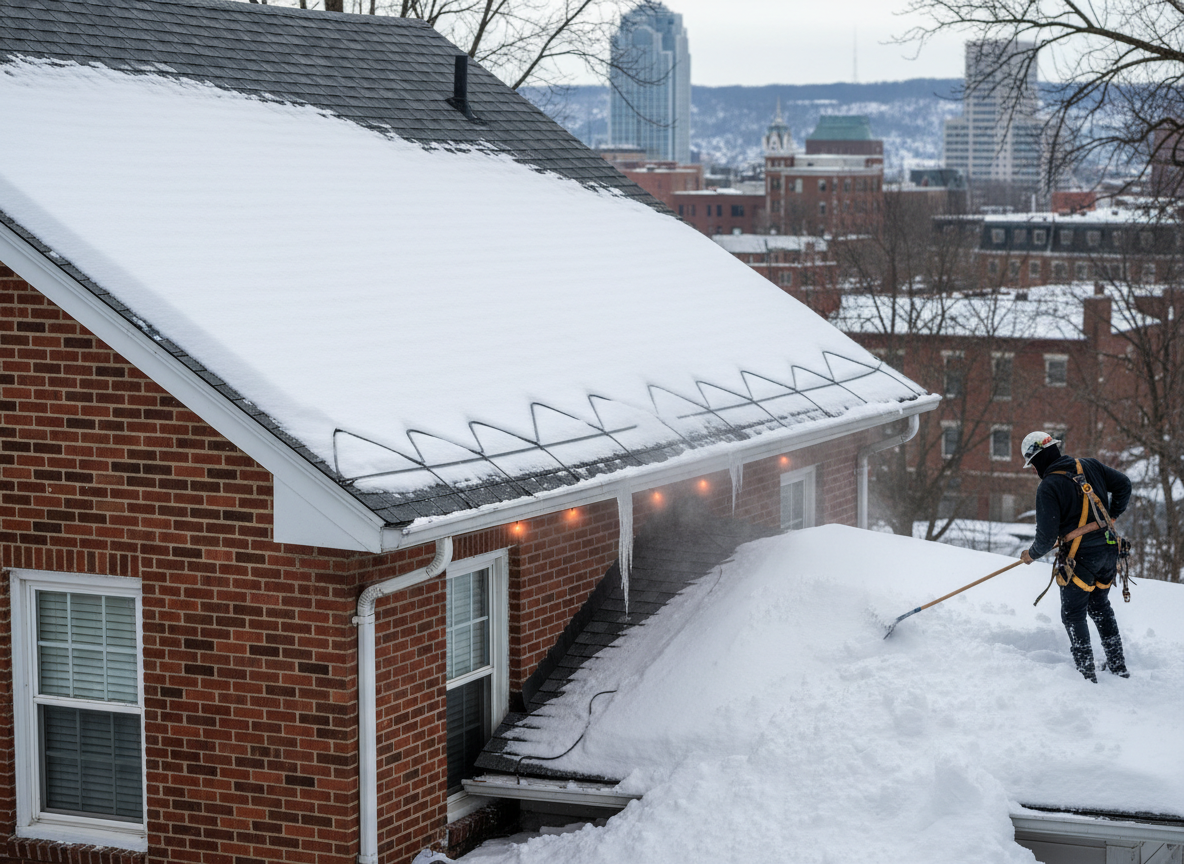
Cincinnati roofs in neighborhoods such as Over-the-Rhine, Hyde Park, and Mount Adams avoid most ice dam damage when attic insulation reaches R-49 and ridge vents stay clear. Homeowners who combine these two measures with weekly gutter checks cut leak risk by more than half during the freeze-thaw cycles common in Hamilton County.
How Cincinnati Winters Trigger Ice Dams
Cincinnati sits in a humid subtropical zone where winter temperatures swing between 15 and 40 degrees. Snow falls, melts on warm afternoons, then refreezes overnight along the eaves. The cycle repeats three to five times each month from December through February. Older homes in Over-the-Rhine and Mount Adams often have limited attic insulation and single-pane windows that let heat rise, melting snow on the upper roof while the overhang stays below freezing. Norwood and Newport properties built before 1950 show the same pattern because their rafter bays lack baffles. Once water backs up under shingles it reaches sheathing and drywall within 48 hours. The result is stained ceilings and rotted fascia boards that appear first on north-facing slopes.
Checking Attic Insulation and Ventilation Before First Freeze
Walk the attic in late fall and look for insulation that has settled below joist level or shows dark spots from past moisture. Add blown-in cellulose to reach the R-49 target if current depth measures less than 14 inches. Install or clear existing soffit vents so air flows from eave to ridge without obstruction. In Hyde Park and Oakley homes with finished attics, rigid foam baffles keep insulation from blocking the intake path. Seal recessed lights and plumbing penetrations with foam gaskets to stop warm air from reaching the underside of the roof deck. These steps keep the roof surface temperature within five degrees of outside air, eliminating the melt zone that creates dams.
Keeping Gutters and Downspouts Clear Through Winter
Leaves from Cincinnati maples and oaks collect in gutters by mid-November. When mixed with early snow they form a dam that forces meltwater sideways under shingles. Clean all gutters and flush downspouts before Thanksgiving, then repeat after any heavy leaf drop. Install 6-inch gutters with 3-by-4-inch downspouts on homes over 2,000 square feet to handle sudden thaws. In Mount Adams and Walnut Hills, where lots slope toward the street, extend downspouts at least six feet from the foundation to prevent refreezing at grade. Homeowners who follow the same leaf and gutter routine outlined in Managing Fall Leaves and Gutters on Cincinnati Roofs report zero ice dam calls during the season.
Scheduling a Professional Roof Inspection
A thorough roof inspection services visit in November catches missing ridge vent screens, sagging valleys, and ice belt damage before the first hard freeze. Technicians measure attic airflow with a blower door and check for heat leaks using an infrared camera. They also examine flashing around chimneys and skylights common on Cincinnati two-story brick homes. If the inspection reveals damaged underlayment or heaved shingles, schedule roof repair before temperatures drop below 20 degrees. Early correction prevents water intrusion that would otherwise require full roof replacement by spring.
Protecting Older Roofs in Historic Cincinnati Neighborhoods
Victorian and early 20th-century homes in Over-the-Rhine and Mount Adams often carry slate or metal roofs that shed snow quickly yet still develop dams at the eaves where heat escapes through uninsulated knee walls. Add insulation blankets to these walls and install electric heat cables only as a last resort after ventilation upgrades. Keep cables on a timer set for 35 degrees to avoid unnecessary energy use. These targeted fixes preserve the original roof while stopping the water intrusion that leads to interior plaster damage during the long Cincinnati winter.