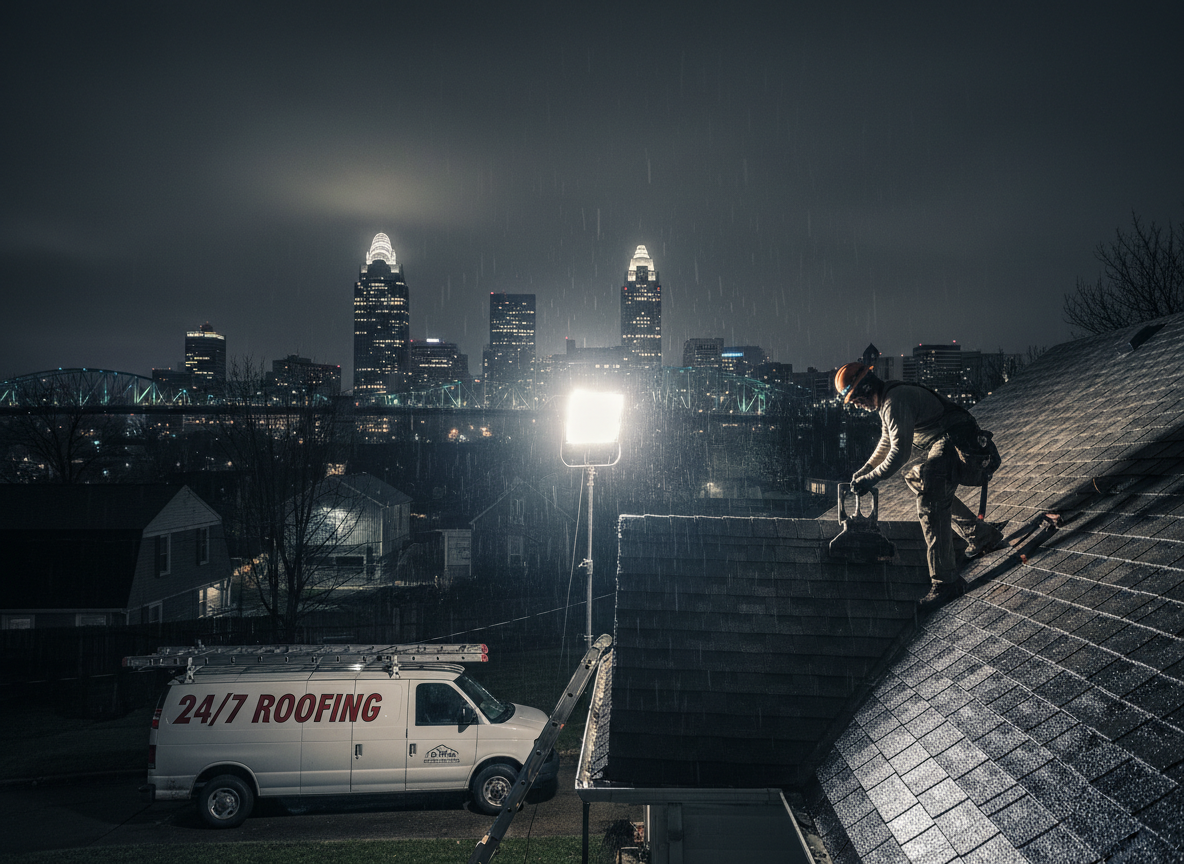
Cincinnati's humid subtropical climate brings sudden heavy summer downpours that expose weaknesses in older roofs across Hamilton County. Homes in Over-the-Rhine and Mount Adams often feature slate or asphalt shingles installed decades ago on steep pitches that shed water quickly when intact but funnel leaks into attics during overnight storms. Servexa Systems maintains crews ready at 1621 Dana Ave to reach these neighborhoods within hours, focusing first on stopping active water intrusion before daylight reveals the full extent of damaged underlayment or flashing around chimneys common in pre-war construction.
Terrain plays a direct role in how 24/7 calls unfold here. The hills around Hyde Park and near the Cincinnati Zoo create runoff patterns that push debris against gutters and low spots, accelerating rot in wooden decks on many two-story homes. Technicians dispatched at night carry portable lighting and temporary membrane patches sized for quick deployment on these slopes, because a small breach near a valley can send water traveling several feet under the shingles before it appears inside. Local building practices in Norwood and Newport also mean many roofs tie into shared walls, requiring careful isolation of the affected section without disturbing neighboring properties.
Hot summer nights increase the urgency of after-hours responses because trapped heat under damaged shingles can soften remaining asphalt and widen splits before morning. Crews prioritize securing the roof deck against further rain while documenting conditions around vents and skylights that older Hamilton County stock often lacks proper flashing for. This approach prevents secondary issues like mold in insulation, which becomes harder to address once humidity returns the next day.
Technician insight
In Cincinnati, the thing that catches most people out with 24/7 roofing service is how fast a humid subtropical storm can turn a minor valley leak in an Over-the-Rhine row house into soaked insulation because the steep terrain funnels water under older slate before anyone notices.
Overnight Leak Call in Hyde Park
Heavy rain hit a 1920s home in Hyde Park after midnight. Water appeared near a second-floor ceiling. We found failed step flashing along a rear dormer where runoff from the hill had backed up debris. A reinforced tarp was secured over the valley and adjacent shingles. The roof was dried and repaired the next morning with new flashing matched to the existing slate.
How it works
- 1
Emergency Dispatch
Call is answered 24/7 and a crew is routed from the Dana Ave location based on the reported neighborhood and weather conditions.
- 2
On-Site Assessment
Technician climbs safely with headlamp and moisture meter to locate active leaks, checking valleys, flashing, and deck condition on the specific roof pitch.
- 3
Temporary Securement
Tarp or membrane patch is installed to stop water entry immediately, with attention to Cincinnati's steep terrain and shared-wall homes.
- 4
Permanent Repair Planning
Full scope is documented and scheduled for daylight hours using materials matched to the existing roof type common in the area.
Pricing
Upfront quotes provided after inspection; emergency after-hours work reflects added crew time and equipment.