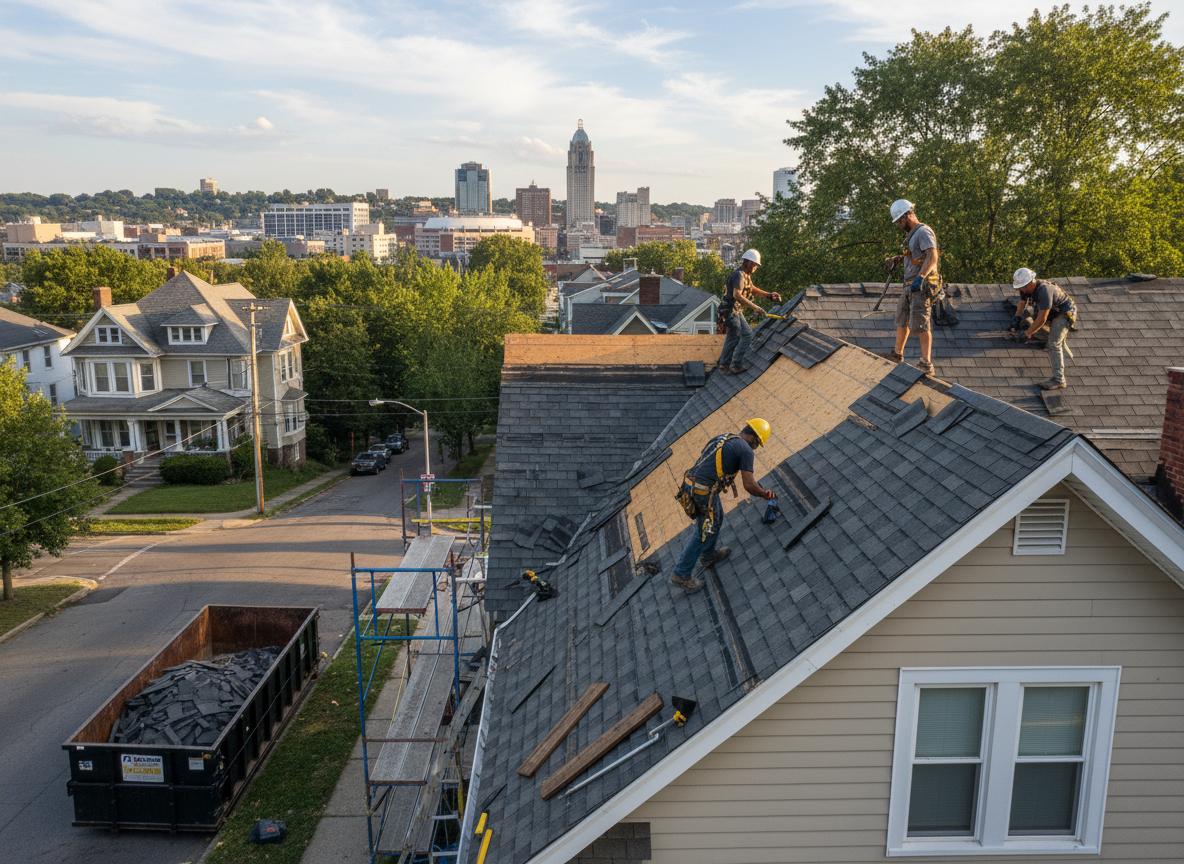
Cincinnati's older housing stock in neighborhoods like Hyde Park and Mount Adams often features steep pitches and original slate or asphalt layers that have endured decades of freeze-thaw cycles. Replacing these roofs requires careful deck inspection because hidden rot from poor attic ventilation shows up more often here than in newer subdivisions. Servexa Systems works from its base at 1621 Dana Ave to reach jobs across Hamilton County without long travel delays during peak summer heat.
Hot humid summers accelerate shingle granule loss and make underlayment adhesion critical when temperatures spike. Crews pay extra attention to ridge venting and intake at eaves to prevent moisture buildup that leads to ice damming in winter. In areas near the Cincinnati Zoo or Findlay Market, tight lots and mature trees add access challenges that change staging and debris removal plans compared with open suburban sites.
Local code in Hamilton County requires proper flashing at chimneys and valleys plus updated drip edge on every replacement. Skipping these details on homes near Norwood or Newport often results in leaks within the first heavy rain. Materials must handle both high UV exposure and occasional high winds that sweep across the Ohio River basin, so selection focuses on impact-rated shingles suited to the actual exposure rather than generic stock.
Homeowners in Over-the-Rhine frequently discover multiple layers during tear-off, which increases disposal weight and labor time. Addressing that upfront prevents schedule overruns when crews hit unexpected felt or wood shake under the surface.
Technician insight
In Cincinnati, the thing that catches most people out with Roof Replacement is how quickly attic heat builds in our humid summers on older homes in Hyde Park and Over-the-Rhine. Homeowners often skip extra ridge venting because the roof looks fine from the street, yet that single detail determines whether the new shingles last or blister within five years.
Hyde Park Two-Story with Hidden Layers
The homeowner noticed interior ceiling stains after a heavy summer storm. Inspection revealed three layers of asphalt over original slate with widespread deck rot along the south eaves. We removed all layers, replaced damaged sheathing, added proper ventilation, and installed impact shingles. The roof now handles both summer heat and winter ice without leaks.
How it works
- 1
Site Assessment
Walk the roof and attic to check deck condition, existing layers, and ventilation in the specific Cincinnati neighborhood.
- 2
Material Selection
Choose shingles and underlayment rated for local humidity and summer heat while meeting Hamilton County requirements.
- 3
Tear-Off and Deck Repair
Remove old layers, inspect for rot, and fix damaged sheathing before any new installation begins.
- 4
Installation and Flashing
Apply new underlayment, shingles, ridge vent, and all step flashing around chimneys and valleys.
- 5
Final Inspection and Cleanup
Check every edge and penetration, then remove debris from the property and surrounding streets.
Pricing
Cost depends on roof size, number of existing layers, pitch, and access in neighborhoods such as Downtown Cincinnati or Mount Adams.