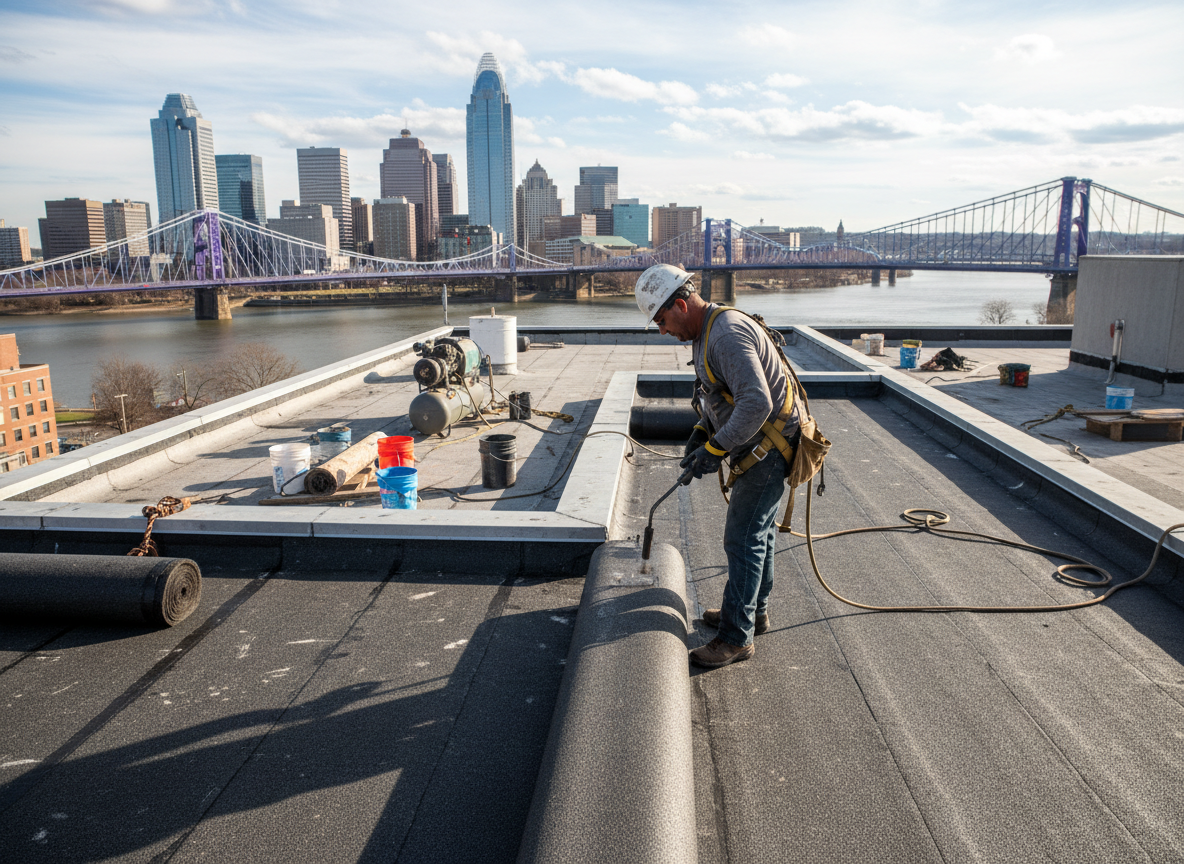
Cincinnati commercial roofs often sit on brick and masonry structures built between 1900 and 1960 in neighborhoods such as Over-the-Rhine and Mount Adams. These buildings frequently feature modified bitumen or single-ply membranes over concrete decks that expand and contract sharply during the hot humid summers common in Hamilton County. Edge details around HVAC curbs and parapets require extra attention because summer heat accelerates membrane shrinkage while winter freeze-thaw cycles open seams that allow water into the insulation.
Downtown Cincinnati and nearby Norwood commercial properties add another layer of complexity with limited staging areas and strict city permitting for work above sidewalks. Hot summers drive thermal movement that can tear flashings at the Great American Ball Park area buildings if counterflashing is not properly regleted into masonry. Crews must account for afternoon thunderstorms that dump heavy water loads on low-slope roofs, making positive drainage and clogged internal drains common failure points that only surface after prolonged heat.
Newport and Hyde Park commercial sites often involve re-covering existing ballasted systems where weight limits and wind uplift calculations differ from residential work. The combination of age-related deck deterioration and summer UV exposure means inspections focus on seam integrity and insulation moisture content rather than simple surface patching. Proper tie-ins at adjoining structures prevent water migration that travels laterally under the membrane for dozens of feet before appearing inside the building.
Technician insight
In Cincinnati, the thing that catches most people out with Commercial Roofing is assuming a 30-year-old modified bitumen roof on a Downtown building can simply be coated over. The real issue is the deck underneath has already taken on moisture from summer storms and poor drainage around Findlay Market area structures, so the only durable fix is removing the wet insulation before any new membrane goes down.
Over-the-Rhine Warehouse Roof Failure
A commercial property owner reported interior leaks after several hot summer days. Inspection found saturated insulation and failed seams around HVAC units on a low-slope roof. The crew removed wet sections, installed new tapered insulation for drainage, and applied a reinforced membrane with updated flashings. Leaks stopped and the owner avoided deck replacement.
How it works
- 1
Site Assessment
Walk the roof with infrared scans to locate wet insulation and document existing penetrations, drainage, and wind zones specific to the building's exposure in Cincinnati.
- 2
Material Selection
Match membrane type and attachment method to deck condition, slope, and summer heat load while confirming compatibility with any existing layers still in place.
- 3
Permit and Safety Setup
Secure Cincinnati building permits and establish fall protection plus street closure plans required for work in dense areas like Downtown or Over-the-Rhine.
- 4
Installation and Daily Cleanup
Install new membrane, flashings, and drainage components with daily debris removal to keep the site safe for neighboring businesses and pedestrians.
- 5
Final Inspection and Documentation
Conduct water testing, provide as-built drawings, and schedule follow-up visits to verify performance after the first summer heat cycle.
Pricing
Project pricing depends on roof size, number of penetrations, access restrictions, and whether tear-off or re-cover is required.