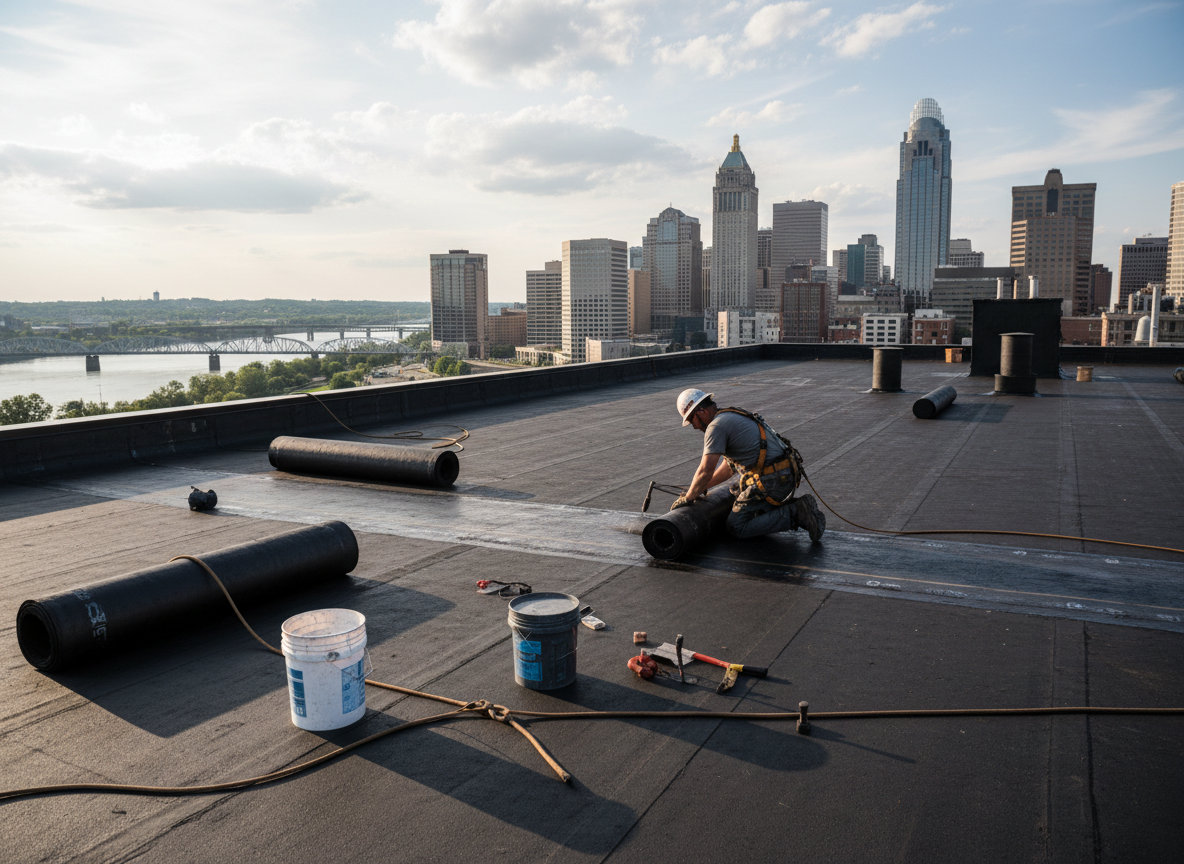
Flat roofs in Cincinnati's humid subtropical climate take heavy punishment from hot summers that soften membranes and expand seams while sudden downpours create ponding on low-slope surfaces. Many structures in Over-the-Rhine and Downtown Cincinnati date to the early 1900s with built-up or modified bitumen systems that crack where they meet parapet walls or HVAC curbs. Servexa Systems at 1621 Dana Ave responds to these conditions by first tracing water paths through insulation layers rather than patching only the visible breach, which prevents repeat leaks after the next storm.
Homeowners in Hyde Park and Mount Adams often discover flat roof issues when interior ceilings show stains near skylights or drains that were never properly flashed during earlier renovations. High summer humidity slows drying of any moisture trapped under the membrane, leading to rot in the decking if repairs stop at surface coating alone. Technicians familiar with Hamilton County permitting requirements know that re-coating or section replacement must maintain proper slope to meet current drainage standards, especially on buildings near the Cincinnati Zoo where tree debris accelerates clogging.
Repairs near Findlay Market or Great American Ball Park frequently involve coordinating around tight urban access and older brick parapets that shift slightly with freeze-thaw cycles even in milder winters. Servexa Systems uses compatible materials matched to the existing system rather than generic sealants that fail under Cincinnati's temperature swings. Every job starts with core sampling to confirm insulation condition before any membrane work begins, avoiding the common mistake of overlaying new material over saturated layers that will blister within a season.
Technician insight
In Cincinnati, the thing that catches most people out with flat roof repair is assuming a surface patch will hold when the real problem is saturated insulation from years of ponding in our humid summers. Over-the-Rhine and Hyde Park buildings often have multiple layers from past owners, so you have to cut through to the deck or the new membrane will blister within one hot season. Always core sample first.
Ponding Leak Near Parapet in Hyde Park
Water was entering near a brick parapet on a 1960s flat roof after heavy summer rain. Core samples revealed wet insulation extending eight feet inward from the wall. The crew removed the saturated material, installed new tapered insulation to restore slope, and tied in a reinforced membrane patch with proper flashing. No further leaks appeared after the next several storms.
How it works
- 1
Site Assessment
Inspect the entire flat surface, drains, and penetrations for active leaks and trapped moisture using moisture meters and core samples.
- 2
Leak Tracing
Map water intrusion paths through seams, flashings, and insulation to locate the true entry point rather than just the interior stain.
- 3
Targeted Repair
Remove damaged sections, replace wet insulation, and install compatible membrane patches with proper terminations at walls and curbs.
- 4
Drainage Check
Clear and test all drains and scuppers, then verify positive slope to prevent future ponding during Cincinnati summer storms.
Pricing
Flat roof repair pricing depends on roof size, extent of wet insulation, and access constraints; Servexa Systems provides upfront quotes after inspection.