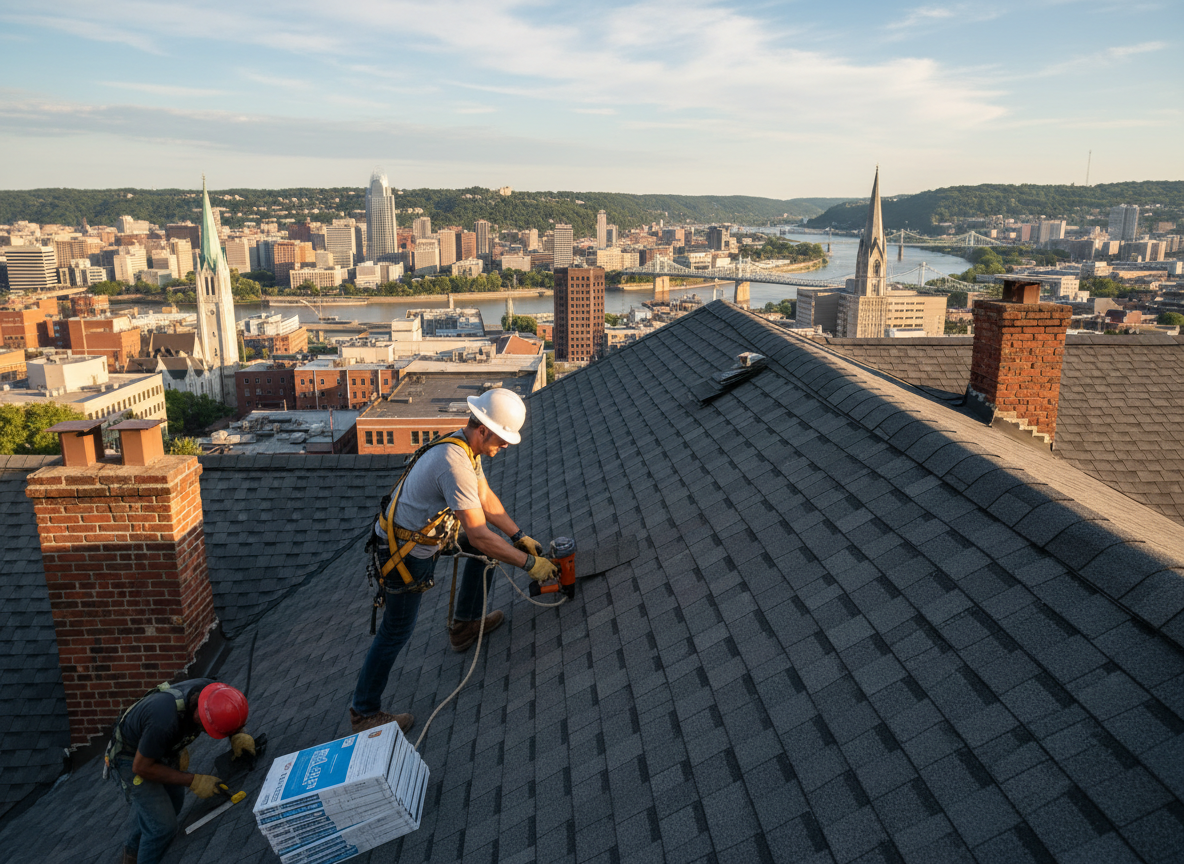
Cincinnati's humid subtropical climate brings intense summer heat and UV exposure that accelerates shingle breakdown on homes throughout Hyde Park and Mount Adams. Roof covering here often involves selecting modified bitumen or synthetic underlayments that resist thermal expansion on older rafters common in Hamilton County Victorians. Steep pitches around Great American Ball Park and narrow lots in Over-the-Rhine require precise flashing details at chimneys and valleys to prevent water intrusion during sudden downpours.
Many properties near Findlay Market and in Norwood retain original slate or wood shake coverings that cannot simply be overlaid without checking deck integrity. Servexa Systems evaluates ventilation needs first because trapped moisture from hot summers quickly leads to rot in attics of homes built before modern code requirements. Edge cases include coordinating with Cincinnati's historic district guidelines when replacing coverings on structures visible from public streets in Over-the-Rhine.
Terrain around the Ohio River influences drainage patterns, so roof covering projects in Newport and Downtown Cincinnati frequently incorporate ice-and-water shield along eaves to manage freeze-thaw cycles even in milder winters. Proper ridge vent installation becomes critical on compact lots where airflow is restricted by neighboring buildings. These details separate lasting work from jobs that fail within a few seasons under local conditions.
Technician insight
In Cincinnati, the thing that catches most people out with roof covering is the hidden deck rot under old layers on homes in Hyde Park and Over-the-Rhine. Hot humid summers push moisture through small gaps that freeze later, and narrow lots limit ventilation options. Skipping a full deck check before covering always leads to callbacks within two years.
Hyde Park Victorian Re-cover
Homeowner noticed interior staining after a summer storm. Inspection revealed failed underlayment over original decking on a steep slate roof. We removed the old layers, repaired soft spots, and installed a new synthetic covering with upgraded flashing. The attic stayed dry through the next humid season.
How it works
- 1
Site Assessment
Measure roof planes, inspect decking condition, and note access constraints specific to the neighborhood's street layout.
- 2
Material Selection
Choose coverings matched to pitch, sun exposure, and any historic requirements in the area.
- 3
Deck Preparation
Repair or replace damaged sheathing and install appropriate underlayment for Cincinnati humidity.
- 4
Covering Installation
Apply new covering with sealed seams and flashing, followed by ventilation upgrades where needed.
- 5
Final Inspection
Walk the roof and attic to confirm drainage and seal integrity before cleanup.
Pricing
Upfront quotes provided after on-site inspection of roof condition and access.