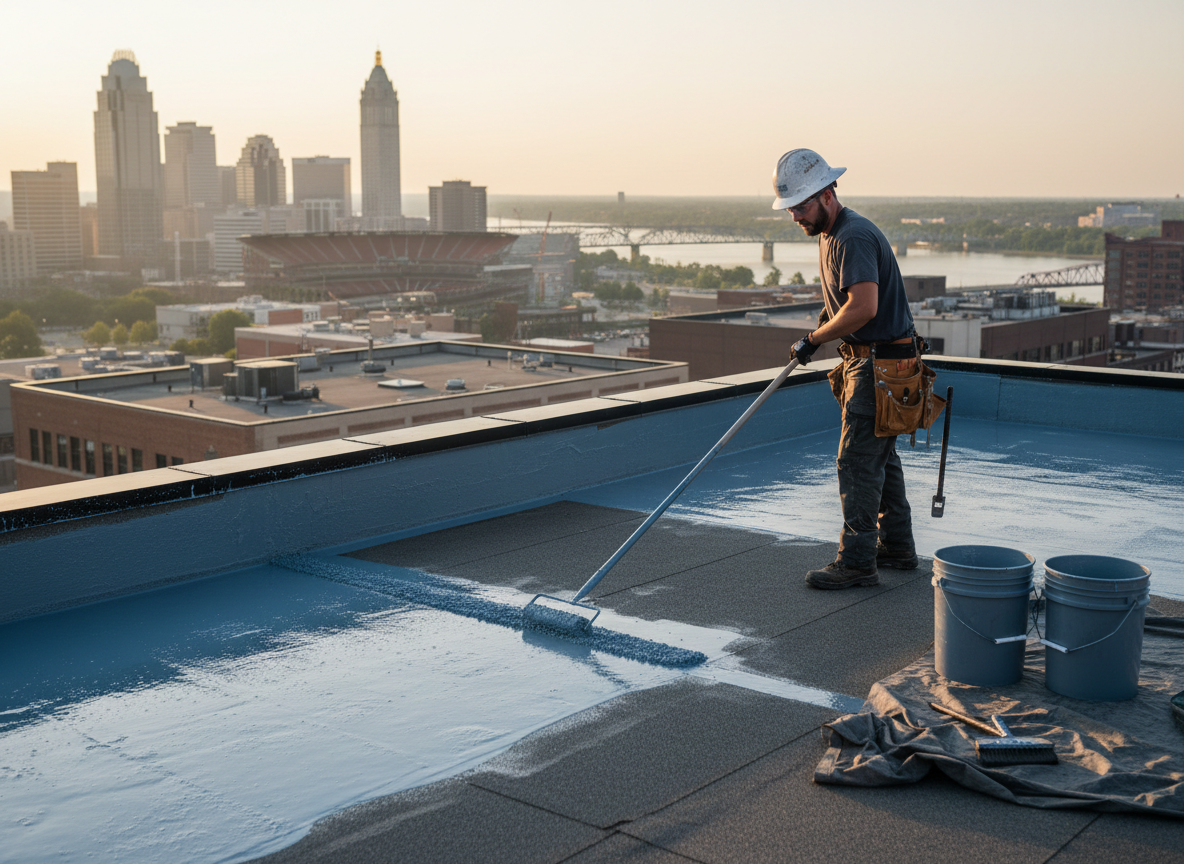
Cincinnati roofs in neighborhoods like Over-the-Rhine and Mount Adams often sit on 19th-century row houses and early 20th-century brick homes where original slate or metal decks meet steep pitches and tight valleys. Humid subtropical summers drive repeated thermal expansion that opens seams and flashing joints faster than in drier climates. Waterproofing here starts with full surface cleaning, then application of reinforced liquid membranes that bridge hairline cracks without adding excessive weight. Crews pay special attention to valleys draining toward the Ohio River basin where leaf litter and pollen accelerate coating breakdown.
Homeowners in Hyde Park and nearby Norwood frequently discover water intrusion only after interior staining appears because many roofs lack proper underlayment upgrades from past decades. Servexa Systems based at 1621 Dana Ave uses cold-applied elastomeric systems that cure even during the region’s hot, humid stretches when solvent-based products fail. Edge details around chimneys and skylights receive extra backer rod and compatible sealants to handle the freeze-thaw cycles that still occur despite mild winters. Every job includes inspection of existing ventilation to prevent moisture trapping beneath the new membrane.
Seasonal Timing Considerations
Scheduling waterproofing between late spring and early fall avoids the brief but intense winter storms that can interrupt curing. Properties near Great American Ball Park and Findlay Market often contend with urban heat islands that keep roof surfaces warmer longer, extending the window for proper adhesion but increasing the risk of blistering if crews apply too thickly.
Technician insight
In Cincinnati the thing that catches most people out with roof waterproofing is how hot summers expand and contract older slate roofs in Hyde Park, opening seams that standard sealants never reach because the substrate keeps moving long after the coating cures.
Hyde Park Brick Home Waterproofing
Water stains appeared on second-floor ceilings after a humid summer. Inspection revealed failed flashing around two chimneys on the 1920s slate roof. The crew cleaned the surface, installed reinforced membrane over the valleys and penetrations, and restored drainage. No further intrusion occurred the following season.
How it works
- 1
Site Assessment
Technicians examine roof slope, existing membrane condition, and drainage paths on the specific Cincinnati property.
- 2
Surface Preparation
Power washing removes debris and loose material, followed by repairs to any damaged decking or flashing.
- 3
Membrane Application
Reinforced liquid waterproofing is applied in multiple coats with attention to seams, valleys, and penetrations.
- 4
Final Inspection
Crew checks for uniform coverage and tests drainage before leaving the site.
Pricing
Cost depends on roof size, pitch, existing condition, and chosen membrane type; Servexa Systems provides upfront quotes after inspection.