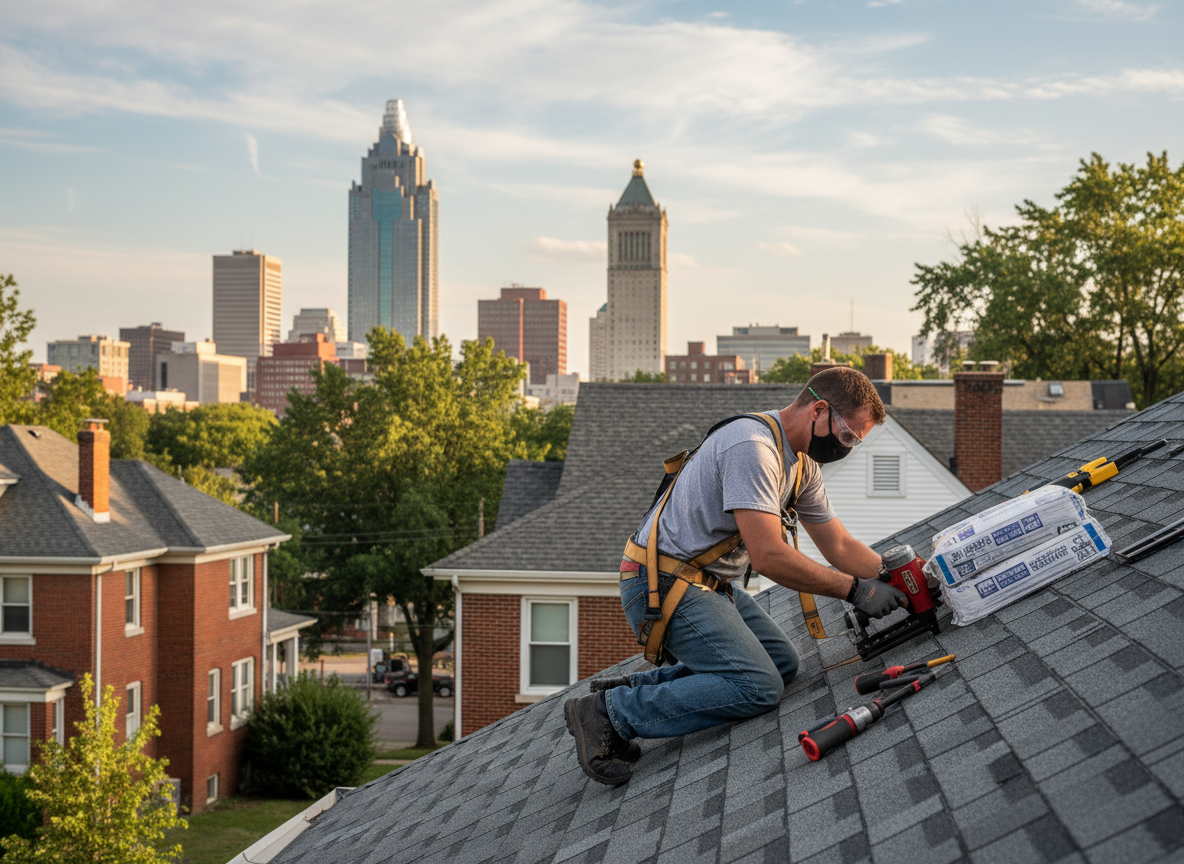
Cincinnati's humid subtropical climate brings hot summers that soften asphalt shingles and accelerate granule loss on roofs across Hyde Park and Mount Adams. Older housing stock from the early 1900s in Over-the-Rhine and near Findlay Market often features slate or wood shake that requires careful underlayment checks during any specialist visit. Steep pitches common on homes near the Great American Ball Park demand extra fall protection and precise flashing work around chimneys to prevent leaks during heavy summer downpours.
Hamilton County building codes emphasize proper ventilation and ice-dam protection even though true ice dams are rare; specialist crews must verify ridge vents stay clear on homes in Norwood and Newport where tree cover traps moisture. Hot summers increase attic heat that can blister newer membrane roofs if intake vents are undersized. Crews working from the 1621 Dana Ave base routinely inspect for hidden rot along eaves caused by the area's frequent humidity spikes rather than just visible surface damage.
Terrain around Downtown Cincinnati slopes create runoff patterns that push water under eaves on lower courses of shingles faster than flat lots in other regions. Specialist work here includes sealing step flashing at every course on two-story brick homes typical in the area. Without addressing these local drainage quirks, standard repairs fail within two seasons when the next round of thunderstorms hits.
Servexa Systems focuses on matching existing materials on historic structures near the Cincinnati Zoo while meeting current energy code updates for insulation at the roof deck. Hot summer installs require timing shingle work before peak heat to avoid stretching or cracking during placement.
Technician insight
In Cincinnati the thing that catches most people out with roofing specialist is how humidity and summer heat combine on older slate roofs in Over-the-Rhine. Homeowners assume a few missing slates are the whole problem, yet the real issue is often the rotted lath underneath from years of trapped moisture on north-facing pitches near the zoo.
Hyde Park ridge vent failure
Heavy summer rain had ponded behind a clogged ridge vent on a 1920s brick home. Inspection showed water tracking under shingles along the east slope. We opened the vent, replaced the damaged underlayment, and reinstalled matching shingles. The homeowner reported no further interior staining after the next storm.
How it works
- 1
On-Site Assessment
Technician examines roof deck, flashing, and ventilation from the address in Cincinnati, noting any slope or drainage issues tied to local terrain.
- 2
Material and Code Review
Crew confirms existing roofing type against Hamilton County requirements and selects compatible underlayment for humid conditions.
- 3
Targeted Repair or Section Replacement
Work proceeds on affected areas only, preserving sound sections common on older Hyde Park homes.
- 4
Final Walk-Through and Documentation
Homeowner reviews completed work and receives photos of sealed penetrations and vent clearances.
Pricing
Upfront quotes provided after inspection; final price depends on roof access, material match, and any hidden deck repairs found on site.