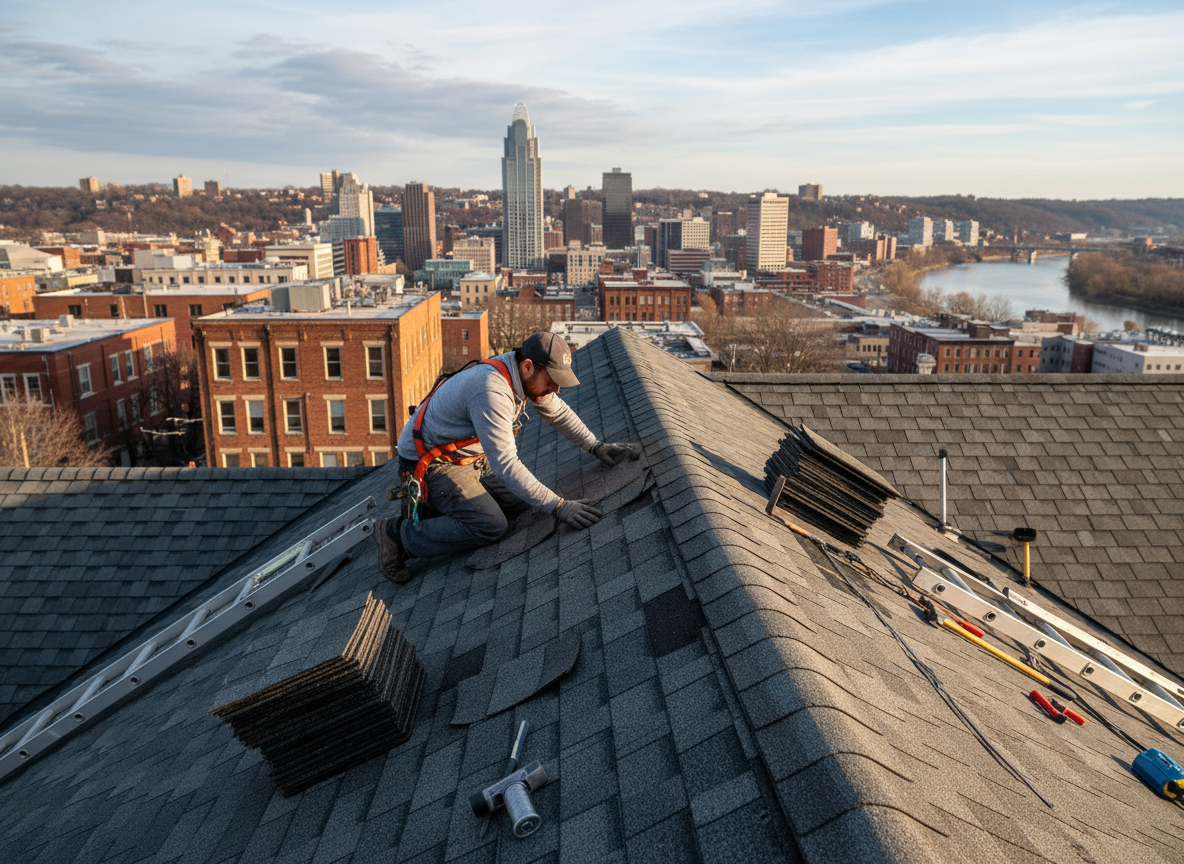
Cincinnati's humid subtropical climate brings hot summers that accelerate granule loss and blistering on asphalt shingles, especially on homes built before 1970 in Over-the-Rhine and Mount Adams. These older roofs often use 3-tab shingles that become brittle after repeated expansion and contraction cycles, allowing wind-driven rain to penetrate underlayment along valleys and eaves. Repair crews must match existing shingle profiles and colors while ensuring step flashing integrates with brick or wood siding common in Hamilton County row houses. Skipping proper ventilation upgrades during repair frequently leads to ice dam issues the following winter even after leaks are stopped.
Homes in Hyde Park and Norwood frequently sit on sloped lots where runoff concentrates at one corner, causing localized deck rot that spreads under the shingle layer. Technicians lift only the affected courses rather than stripping entire slopes when the felt and decking remain sound, but they always check for delamination around plumbing vents and chimney cricket areas. In Newport just across the river, similar humidity levels combine with tree cover to trap moisture, so repairs include clearing debris from gutters and confirming ridge vent function before closing the job. Edge cases include matching discontinued shingle lines still found on many 1960s ranch homes scattered through the county.
Code compliance in Cincinnati requires permits for any roof work exceeding one square, and inspectors look for proper nail placement and drip edge installation on all repairs. Crews carry replacement underlayment and ice-and-water shield to address low-slope transitions around additions common in the area. Homeowners often overlook that summer heat softens shingles during the day, making foot traffic risky and increasing the chance of granule displacement if work is not timed for early morning or evening hours.
Technician insight
In Cincinnati, the thing that catches most people out with shingle roof repair is how the combination of hot humid summers and older 3-tab shingles on Hyde Park and Over-the-Rhine homes lets small blisters turn into widespread leaks along the north-facing slopes before homeowners notice anything inside.
Hyde Park Slope Repair
Heavy summer storms left water stains along a second-floor ceiling on a 1965 home. Inspection revealed blistering shingles and rotted decking concentrated at the low corner where the lot sloped toward the street. We lifted three courses, replaced the affected plywood and underlayment, then reinstalled matching shingles with added ice-and-water shield at the valley. The homeowner reported no further leaks after the next rainfall.
How it works
- 1
Initial Inspection
Assess shingle condition, deck integrity, and water intrusion points from the attic and exterior on the specific Cincinnati property.
- 2
Material Matching
Source replacement shingles that align with existing color, thickness, and tab style found on the home.
- 3
Targeted Removal and Repair
Lift damaged courses, replace compromised underlayment or decking, and reinstall shingles with correct nailing pattern.
- 4
Flashing and Ventilation Check
Inspect and reseal step flashing, valleys, and vents while confirming attic ventilation meets local humidity demands.
- 5
Final Walkthrough
Review completed sections with the homeowner and document the repair for future reference.
Pricing
Upfront quotes provided after on-site inspection; costs vary with extent of deck damage and shingle availability.